
Sliding Door Roller or Track: How to Tell Which Is Worn
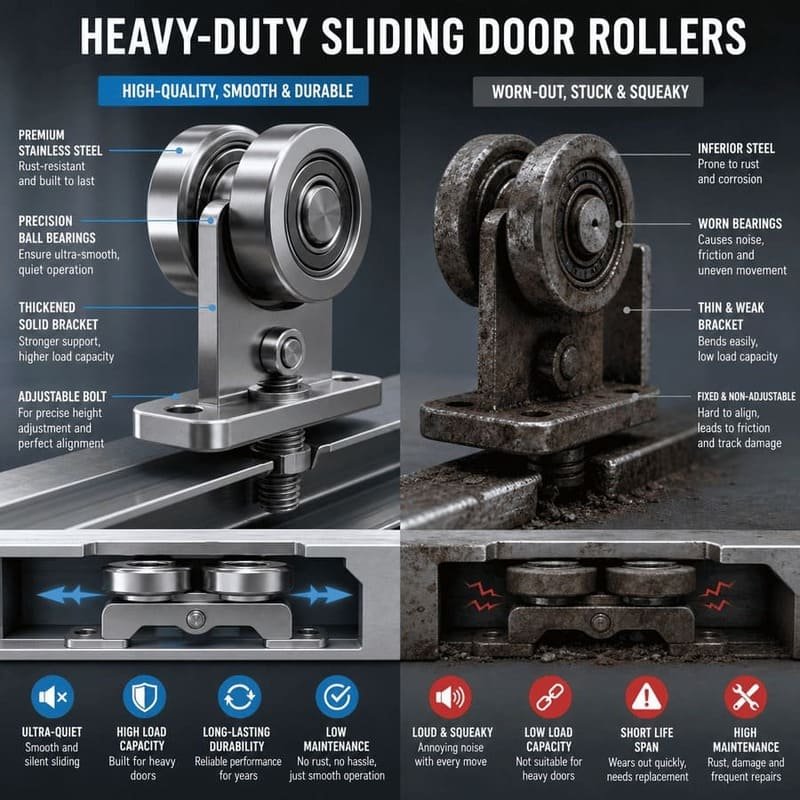
Rollers or track: naming the right one decides whether the fix is a small parts job or a bigger strip-out. A fitter narrows it down with a few simple observations, and you can run the same tests yourself before anyone arrives.
Do these three tests first
- Lift the door: a sound sash lifts a centimetre or so off the track and drops back cleanly onto its wheels. If it lifts hard or barely moves, rollers may be collapsed or seized.
- Roll it empty: open and close the door half-loaded — hold your hand flat on the glass and push at the centre rather than the frame. Resistance that stays heavy is rollers; resistance with texture, grit or a catch is the track.
- Mark the spots: stick a piece of tape at every point the door hitches. One fixed point on the track points at track damage. Hitches spread across the travel or heavy drag everywhere points at rollers.
If the track is visibly packed with grit, clean it and re-run everything — a dirty track fakes both faults at once.
Signs the rollers are the problem
Worn rollers announce themselves with sound as much as feel: a rumble, a hollow clatter or a scrape under load, rather than a smooth hum. Look at the sash sitting in its track — if it sits low, one side lower than the other, the roller carriage has collapsed or lost adjustment.
Rollers also give up progressively. A door that has been getting heavier over months, without any new damage, is a wear part doing what wear parts do. Standard rollers are replaceable in most systems, though access matters: some sit behind a removable cover, others require the sash lifted out of the track first, which on heavy glass doors is a two-person job.
Signs the track is the problem
A bent or worn track gives a consistent fault: the same bump, the same flat spot, the same release point on every pass. Run a fingernail along the track channel — a real dent or step you can feel at one spot is physical track damage, not contamination.
Worn aluminium shows as a polished-away ridge or a track base worn thin where the wheels travel daily. Corrosion from sea air and cleaning chemicals adds pitting; pitted tracks never roll quietly again, however new the rollers are. Where the sash has ridden hard against one side, you often find both track wear and rollers worn on that same side — the parts fail together.
What each repair involves
Roller replacement is a contained job: lift the sash, swap the carriages, reset the height and re-seat. Alignment comes back with it — gaps along the handle stile even out, and the latch meets the keep properly again. That last point matters because a door hanging low also strains its lock: misalignment is why the hardware fails, and we cover that in our sliding door lock and handle guide.
Track work is heavier. It means removing the sashes, extracting the old track section, fitting a replacement that matches the profile, and re-setting everything that sits on it. It also means the wall opening is out of service while work happens, which is why the diagnosis should be firm before committing.
When it is both (and when to stop testing)
On older doors the honest answer is often both — rollers worn from dragging on an already rough track, track roughened by collapsed rollers. Replacing only one part tends to bring the fault back — the same slow deterioration we describe in why sliding doors get harder to open.
If your tests disagree, or the sash is heavy glass you would rather not lift, stop testing and get a look. Power Eagles services sliding doors across Dubai as a full sliding door repair service — we confirm which parts are finished with the sash in hand, and the written quote names them individually.
Frequently Asked Questions
Which repair costs less, rollers or a new track?
Rollers, as a rule — a contained parts-and-labour job with the sash untouched. Track replacement adds sash removal and section work. Both are still cheaper than a full door, provided the diagnosis is right the first time.
Can I replace rollers myself?
If the sash lifts out safely and matching rollers are available, mechanically yes — but glass sashes are heavy and awkward, and wrong-size rollers ruin a new track fast. Many owners start and call halfway; there is no shame in booking it properly first.
Why does my door hitch only in one spot?
That pattern almost always means track damage — a dent, burr or flat spot at that exact point. Roller wear feels more evenly distributed across the whole travel, or varies with speed and load rather than position.
Power Eagles identifies and repairs sliding door roller and track faults across Dubai. Call +971 50 2547177 or message us on WhatsApp (https://wa.me/971502547177) for an inspection and a written quote covering only the parts you actually need.
Let's Made Your Custom product !

Our Services
Get In Touch
Copyright © 2026 Power Eagles LLC
- Privacy & policy
- Term & Conditions
Pingback: Sliding Door Lock and Handle Replacement Guide - PowerEagles LLC - Aluminium & Glass Company
Pingback: What Affects Sliding Door Repair Cost in Dubai: An Honest Guide - PowerEagles LLC - Aluminium & Glass Company
Pingback: Why Hot Air Comes Through Your Sliding Balcony Door (and What Stops It) - PowerEagles LLC - Aluminium & Glass Company