
Training your pet to use a new flap in a few calm sessions
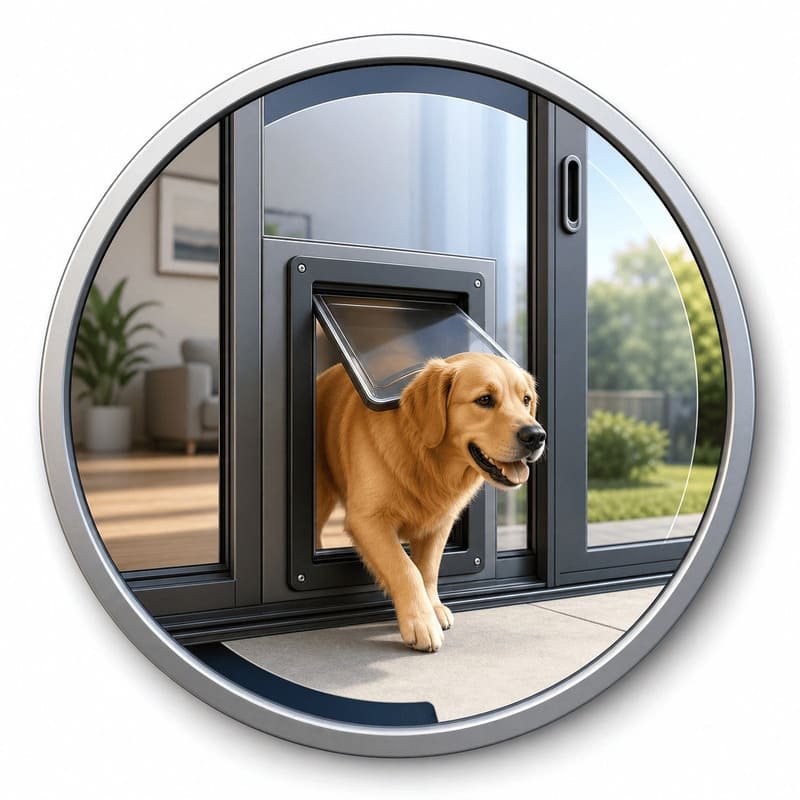
A new flap is a strange, moving thing in a pet’s world. Most pets learn it in a few calm sessions. The ones that do not are usually being pushed, rushed, or working against a flap that is too small for them.
Why calm beats quick
Pets learn through the flap, not around it. If every attempt feels safe and ends with something good, the pet chooses the flap next time. If it is rushed or forced, the flap becomes something to avoid, and you end up with a pet that walks the long way round to the door you open by hand.
Short sessions repeated through the day beat one long session. A pet that has been at it for ten minutes is not learning anymore, it is just tired.
Start with the flap held open
Begin with the flap propped or taped fully open, so there is nothing to push through. Let the pet walk through a clear opening a few times and get used to the frame, the sound it makes, and whatever is on the other side. Familiarity first, movement second.
Do this at the pet’s own pace. A cat that has walked through an open flap six times already knows the route, and that knowledge is what makes the next step easy.
The tape method
Once the open gap is familiar, tape the flap partly closed and reduce it gradually. Each session, tape it a little more shut and reward every pass. The pet barely notices the flap getting heavier because it keeps doing what already works.
Work in small steps. A flap that goes from fully open to fully closed in one session is a different problem from one that eases shut a little more each time.
Food on both sides
Put something the pet values a short distance beyond the flap. Not so far that it distracts, close enough that the pet steps through to reach it. Alternate the direction so the flap works both ways, in and out.
The inward and outward directions feel different to a pet, because the flap pushes against them from the other side. Practise both before you call the training done.
Why forcing backfires
Holding a pet against the flap, pushing it through, or blocking its retreat teaches it that the flap means being trapped. That is exactly how a pet learns to refuse. Never make passing through feel like a one-way trap.
If a pet backs out of the opening, let it. It will come back when it is ready, and it will come back to a flap it chose rather than one it was pushed through.
Cats versus dogs
Cats are cautious about headroom and sound, and they want to see what is on the other side, so a clear flap helps. Dogs are more likely to push through with momentum, so reward the first confident pass and build on it.
Both respond to short, frequent sessions more than long, tiring ones. Younger pets and older pets differ too: an older pet with stiff joints will struggle with a high threshold long before it objects to the flap.
When a pet still refuses
If a pet refuses for more than a week or two, check the basics rather than pushing harder. Is the flap big enough? Does it push easily? Is the flap clear or frosted, since some pets dislike an opaque flap? Is there a draught or a loud noise on the far side?
Fix the physical issue and the behaviour usually follows. A cat flap or dog flap fitted at the right height and size solves most of the trouble before training even begins. If you are renting, a renter-friendly fitting keeps the training on your pet’s terms. Our pet door installation service fits the flap and can advise on position, and our guide to installing a cat door without cutting is a useful next read.
Frequently Asked Questions
How long does training usually take?
Most pets take a few short sessions spread over several days. There is no fixed number, and a pet that is rushed generally takes longer than one allowed to go at its own pace.
Should I hold the flap open for my pet?
At the start, propping or taping it open is fine and helps. The goal is to reduce the opening gradually, not to hold it open forever.
What if my cat refuses the flap entirely?
Check the flap size, the push effort, and whether the flap is opaque. Physical discomfort or a tight fit causes most outright refusals.
Do treats work for dogs and cats?
Both respond well to a reward on the far side. Keep it close enough that the pet steps through without hesitation.
Need a flap fitted at the right size and height before training starts? Send a photo of the door on WhatsApp at wa.me/971502547177, or call +971 50 2547177.
Related pet door guides
Before you book, compare our Dubai pet door installation service for glass, wood and sliding doors with two guides owners in a similar spot found useful: keeping neighbourhood cats out with microchip and lockable flaps explains selective access, while giving a villa garden cat access without leaving doors open covers outdoor cats.
Let's Made Your Custom product !

Our Services
Get In Touch
Copyright © 2026 Power Eagles LLC
- Privacy & policy
- Term & Conditions