
What size flap does your cat or dog need?
The most common reason a pet ignores a new flap is not training. It is size. Fit a flap that is too small and your cat or dog will squeeze through once, feel trapped, and refuse it from then on. Get the measurement right and the rest is far easier.
Measure the pet, not the breed
Breed charts are a starting point, not an answer. Two cats of the same breed can differ by a third in size, and a tall, lean dog can be wider at the shoulder than a heavier one. Measure your own animal, standing, relaxed and still. A treat held just out of reach keeps most pets still long enough to get a fair number.
If your pet is unusual, wiry and narrow but deep-chested, or a small dog with a large head, the measurement matters even more. The flap has to clear the widest part of the animal, not the average part.
The measurements that matter
- Shoulder width: the widest solid part of the body. This sets the minimum flap width.
- Height: for a cat, the tallest point with the head up, including the ears; for a dog, height at the shoulder and head.
- Weight: this tells you the flap strength and hinge type you need.
- Chest depth, for dogs: a deep-chested dog needs more width than its weight alone suggests.
Take each measurement twice. Pets shift, and a flap cut to a figure taken in a hurry is the kind of mistake nobody notices until the pet stops using it.
Why an undersized flap gets refused
A pet judges the opening before it commits. If the flap looks tight, brushing its shoulders or back, many cats simply will not push through. Dogs will try once or twice and then learn to ask you instead, which is charming for a week and inconvenient after that.
The refusal looks like stubbornness but it is not. The animal has decided the gap is smaller than it is, and a flap that touches it on the way through confirms that decision every time.
Flap height from the floor
Height off the ground matters as much as pet size. Too high and a small pet cannot clear it without jumping. Too low and a larger pet has to stoop, which puts the flap against its back.
Set the opening so the pet walks through at its normal stride, with its tail clear and no crouching. Measure from the finished floor, not the carpet, and check the threshold lip, because a raised threshold changes the effective height.
Glass, wall and sliding-track options
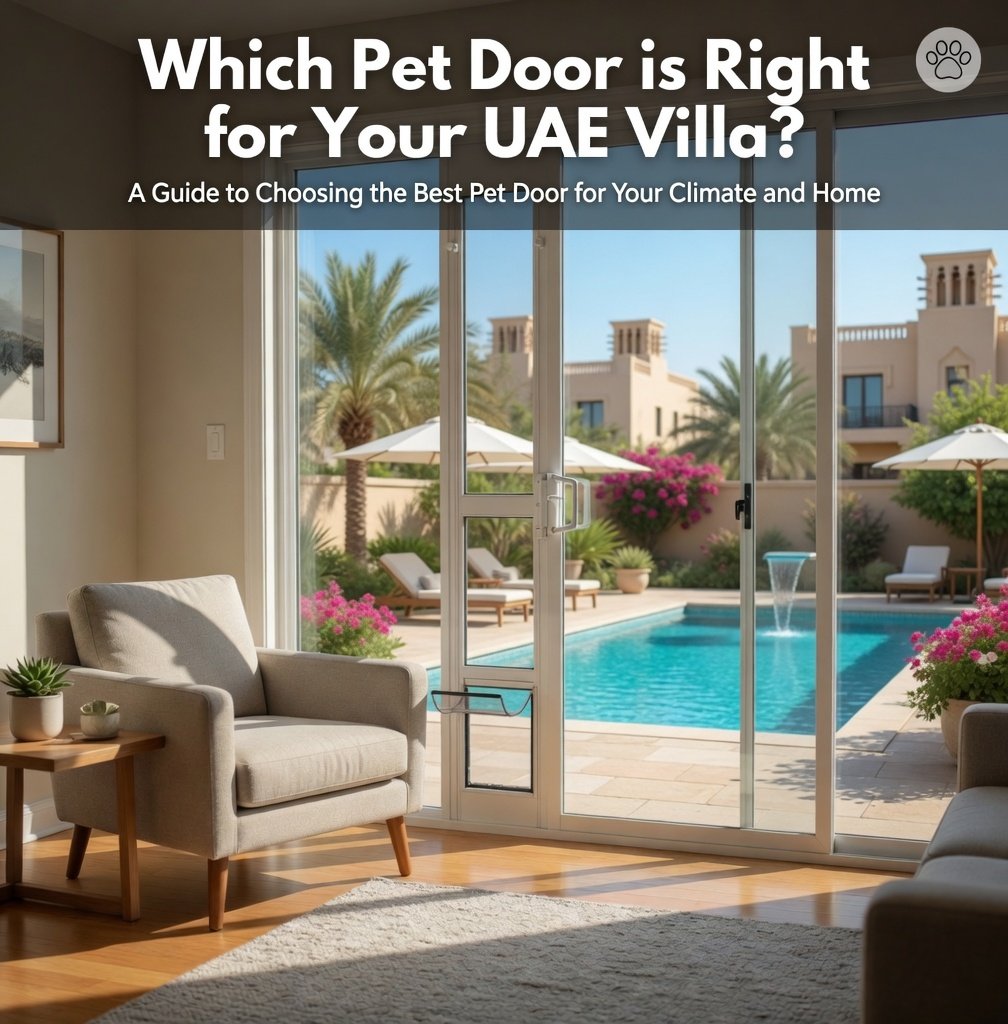
The flap is only half the job. Where it goes decides which type you need. A cat flap or a flap for glass and sliding doors can be fitted into a glass door, a timber door, a wall, or a sliding door with a suitable panel.
Glass fittings use a cut panel sized to the door, so the existing glass is replaced with a panel that has the flap in it. A wall fitting needs a core hole through the wall. Sliding doors often use a purpose-made panel that sits in the track, which keeps the original door untouched. Our pet door installation service covers all of these, and if you cannot cut the original door at all, the approach in our guide to installing a cat door without cutting is the route to look at first.
What to have ready before you ask
Before asking for a quote, gather the pet’s shoulder width, height and weight, a photo of the door or wall, and a note of whether it is glass, timber, aluminium or masonry. Add a photo of the floor line under the door. That is enough for a sensible conversation about type and position.
Also think about which way the door swings and what is on the other side. A flap in a door that opens onto a wall leaves the pet no room to stand, which is a positioning problem rather than a sizing one.
Frequently Asked Questions
Is there a standard flap size?
There are common sizes, but a standard size is not the same as the right size. Measure your pet first, then match a flap to the measurements rather than the other way around.
Should the flap be bigger than the pet?
Yes, with a little clearance at the shoulders and above the head. A flap that exactly matches the pet’s width is tight enough that many pets refuse it.
Can I fit a flap to a rented apartment?
Often yes, using a panel method that avoids altering the original door. Our guide on installing a cat door without cutting explains the approach in detail.
Do two pets need two flaps?
Not usually. One flap sized for the larger pet suits both. Only the control method, like a microchip reader, needs to tell them apart, which a microchip flap handles.
Send your pet’s measurements and a photo of the door or wall on WhatsApp at wa.me/971502547177, or call +971 50 2547177, and we will suggest the right flap size and position.
Related pet door guides
Once the size is right, our pet door installation team in Dubai can fit the flap at the correct height. For what happens next, see training your pet to use a new flap in a few calm sessions and keeping neighbourhood cats out with a microchip flap.
Let's Made Your Custom product !

Our Services
Get In Touch
Copyright © 2026 Power Eagles LLC
- Privacy & policy
- Term & Conditions